Augmentative and Alternative Communication (AAC) refers to tools and strategies that support individuals with speech difficulties in communicating effectively.
AAC tools empower individuals on the spectrum to convey their thoughts, needs, and emotions more effectively—regardless of their verbal abilities.
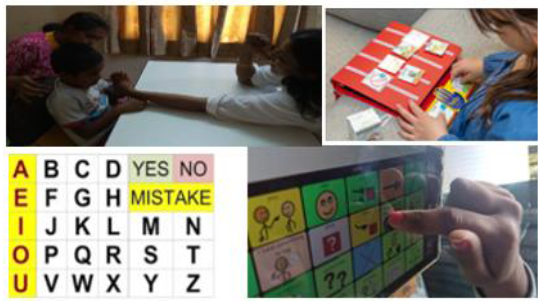
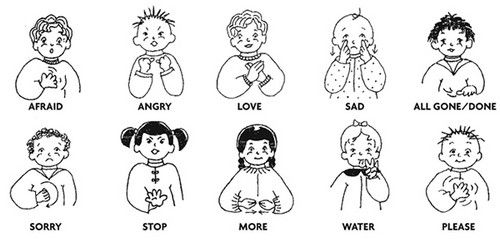
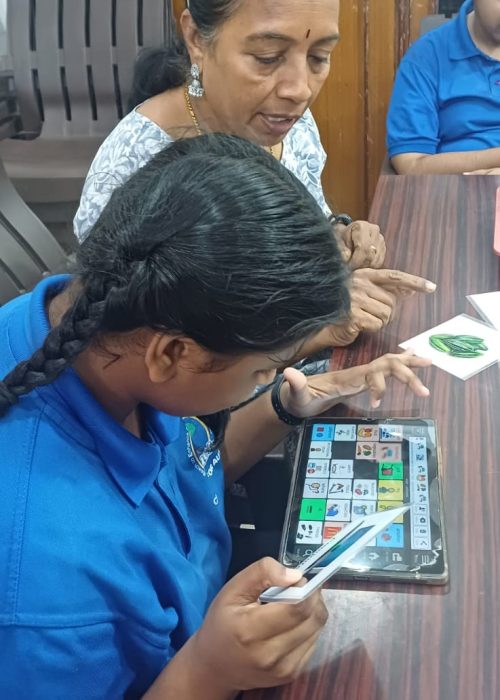
Some of the popular examples that we use to help our children communicate are Sign Language, PECS, Letter Boards and the Avaz App.
When the children are young, we teach them basic
sign language to convey feelings, needs and
concerns such as using the washroom, hungry,
sleepy etc.
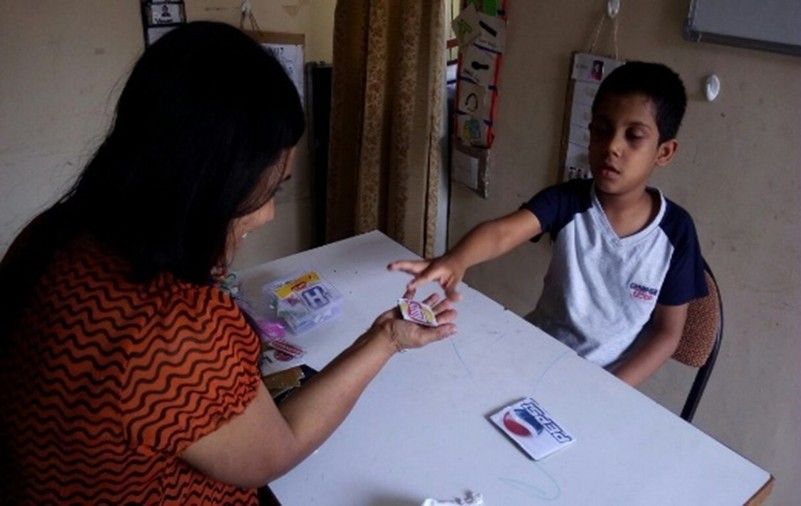
Since Autistic children are visual learners, PECS (Picture Exchange Communication System) uses pictures to teach functional communication to individuals, enabling them to initiate communication by exchanging pictures for desired items or actions.
An individual with Autism can use PECS to communicate a request, a thought, or anything that can reasonably be displayed or symbolized on a picture card.
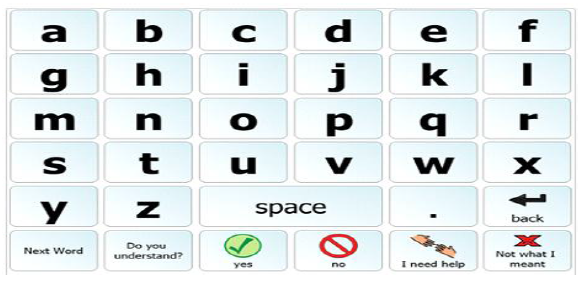
With a Letter Board, individuals can point to letters and numbers to spell their message. It provides better scope than pictures because typing allows formulation of thoughts without relying on the limited scope of pictures.
The board may also have other symbols listed on the bottom to facilitate effective communication, such as select “yes” or “no” in response to a question.
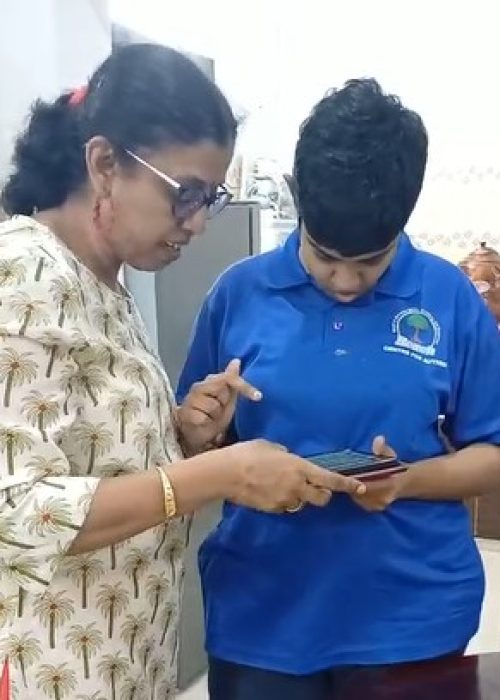
In the late 2000s, engineers from IIT Madras collaborated with special needs professionals to develop AVAZ – India’s first AAC App that includes customisable prompts to aid communication. The AVAZ app can be run on any digital device – phone, tablet, PC.
Ms Lata Iyer is an Avaz Certified Educator, and has successfully trained her daughter on how to use the Avaz App to express herself.
“Just because I don’t talk, doesn’t mean I don’t understand”